I don't design assets one at a time. I design the system that holds them together.
Production is the half of the job that decides whether a brand still holds together once the volume goes up. It's also the half nobody puts in a portfolio.
Still running, with no designer in the loop.
ProvesGovernance. The system kept running after the designer left.
A private clinic talking about incontinence, screening and men's health, which are subjects people avoid. Getting the format right took an afternoon. Getting the tone right took months: credible enough to trust, never frightening.
So I built the thing that makes the posts: a template set, a photo library from my own shoot, an illustrated character, an icon system and a handful of recurring formats. Anyone on their team can produce on-brand work without a designer.
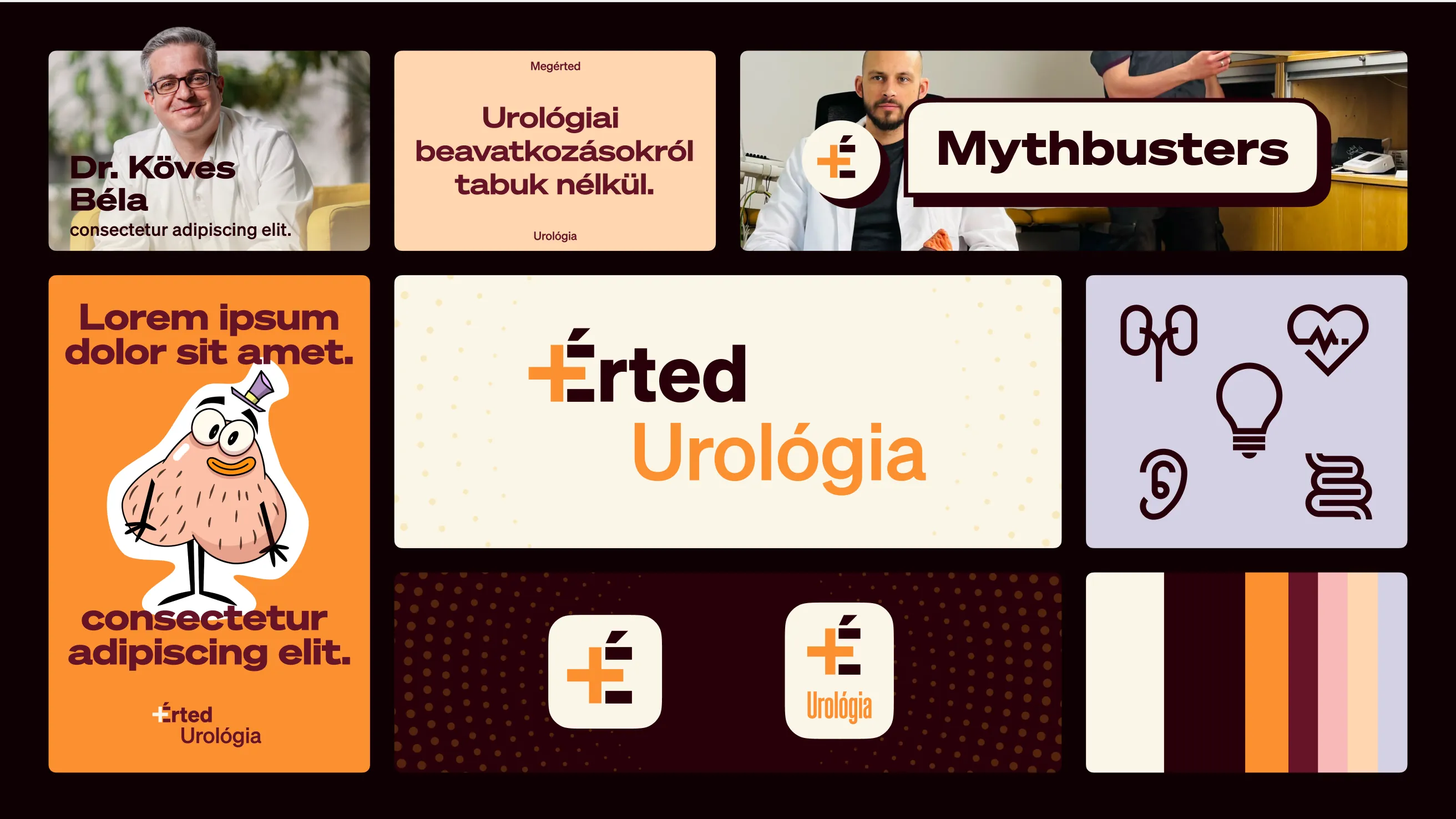
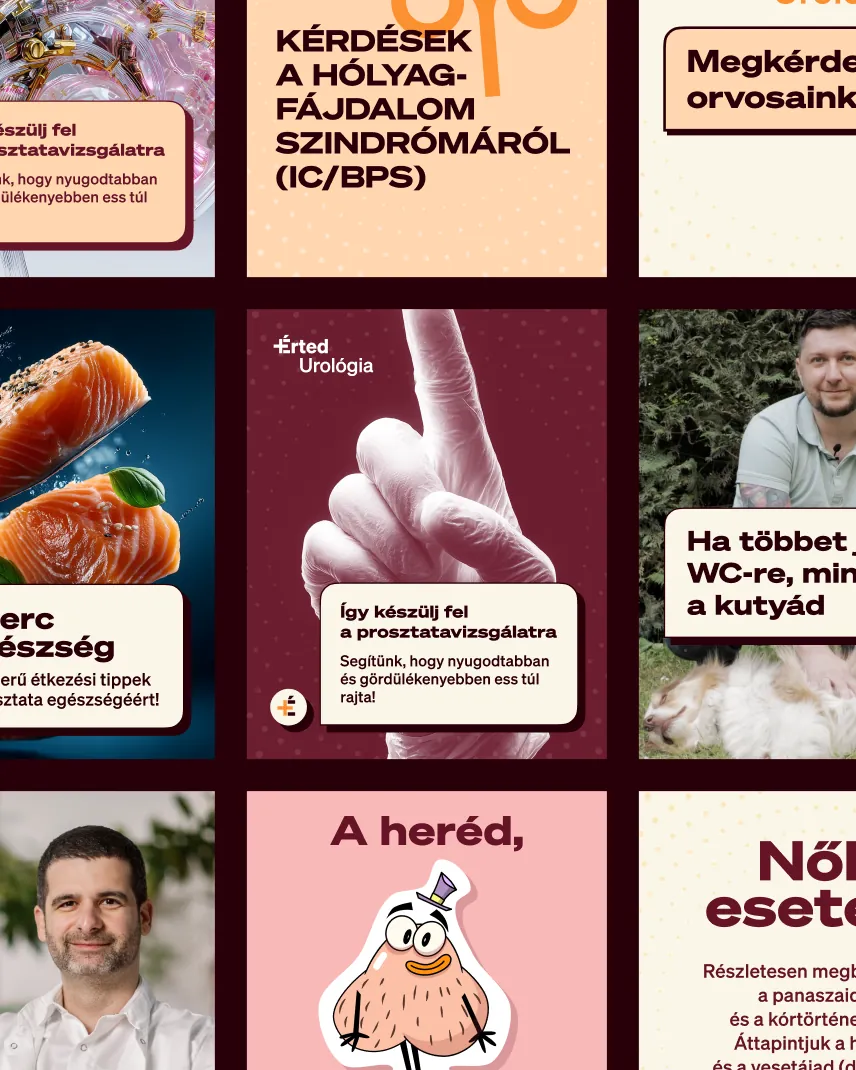
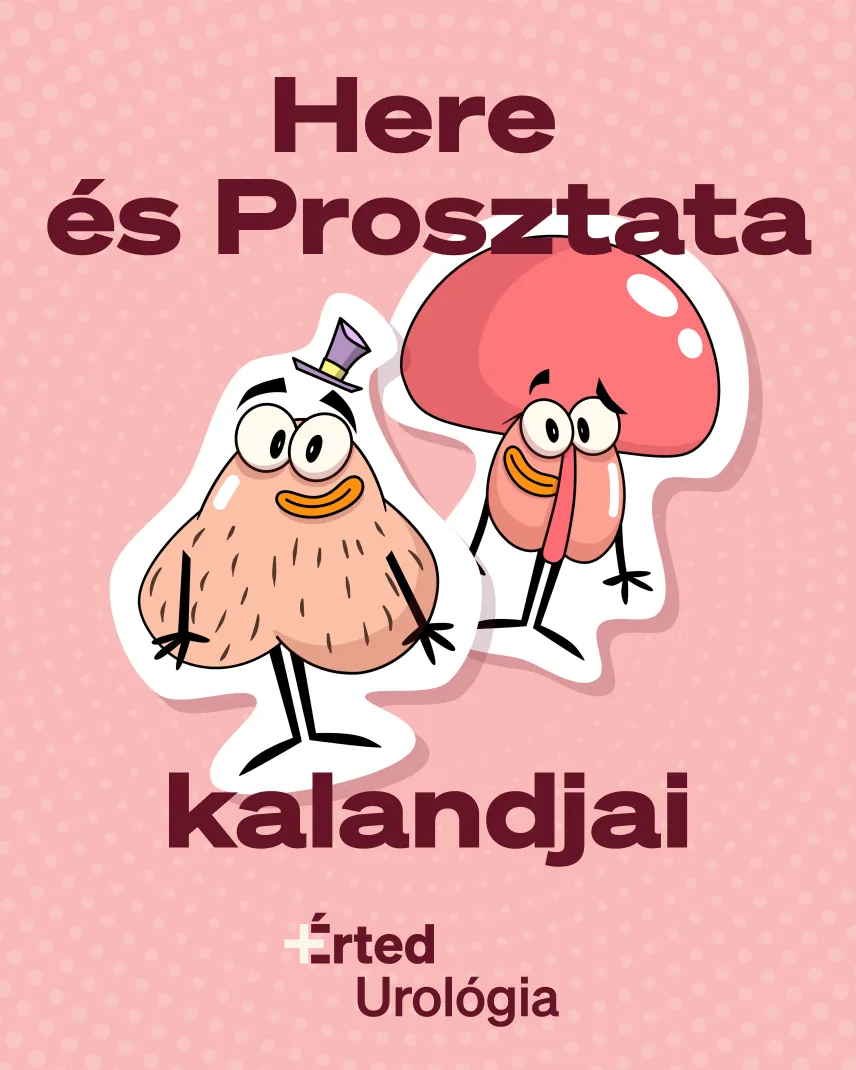
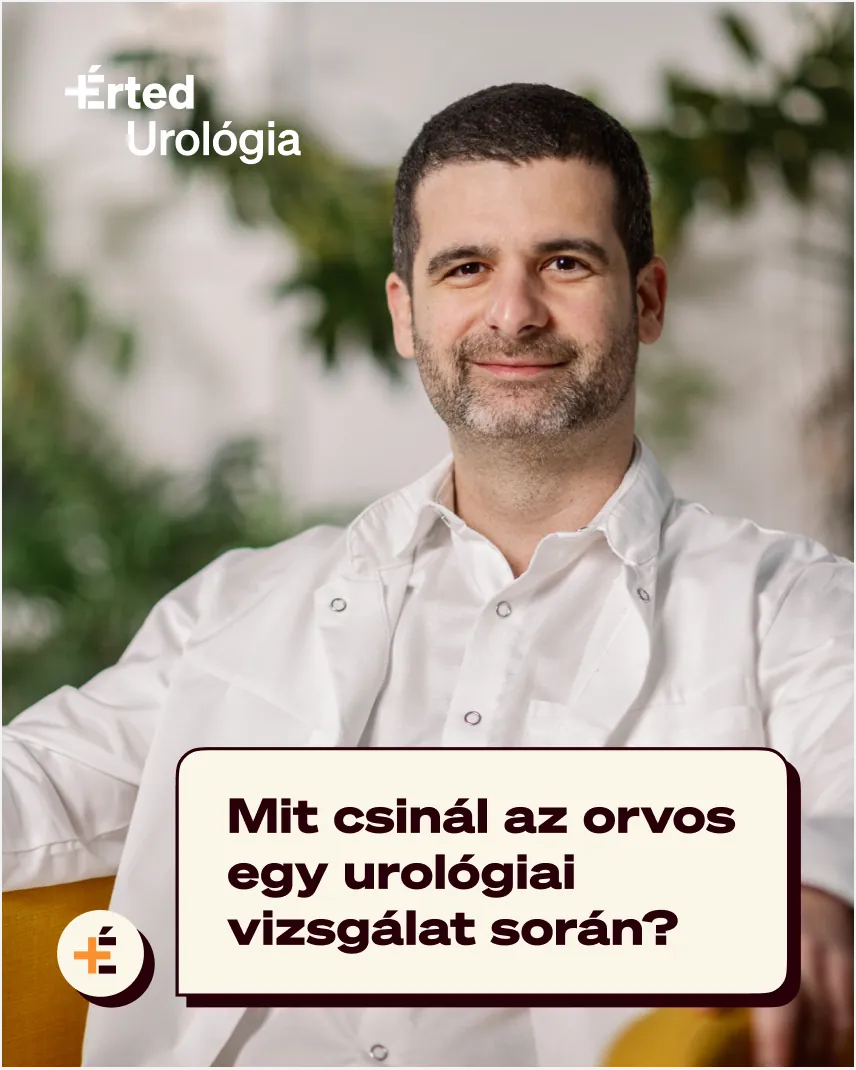
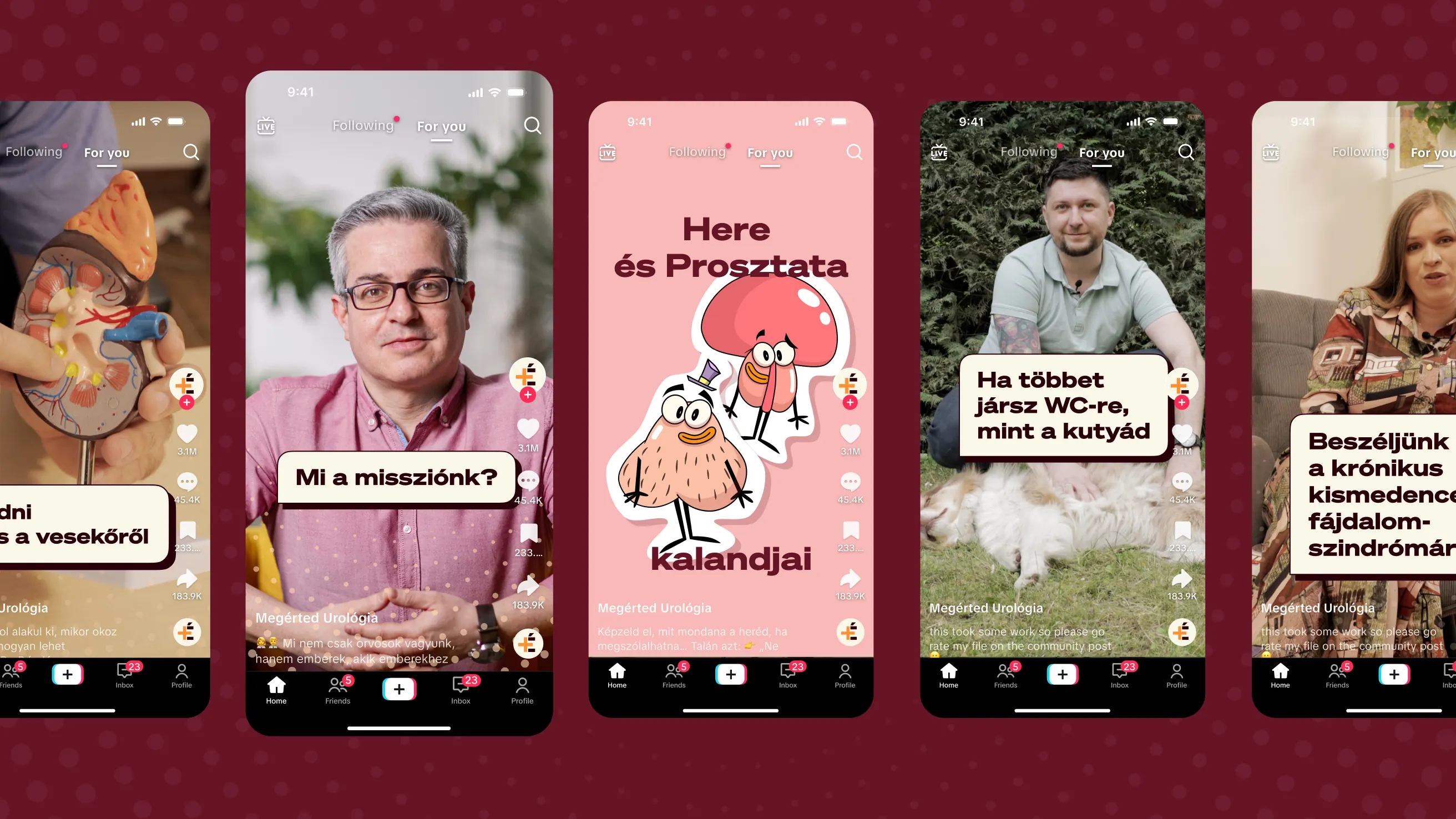
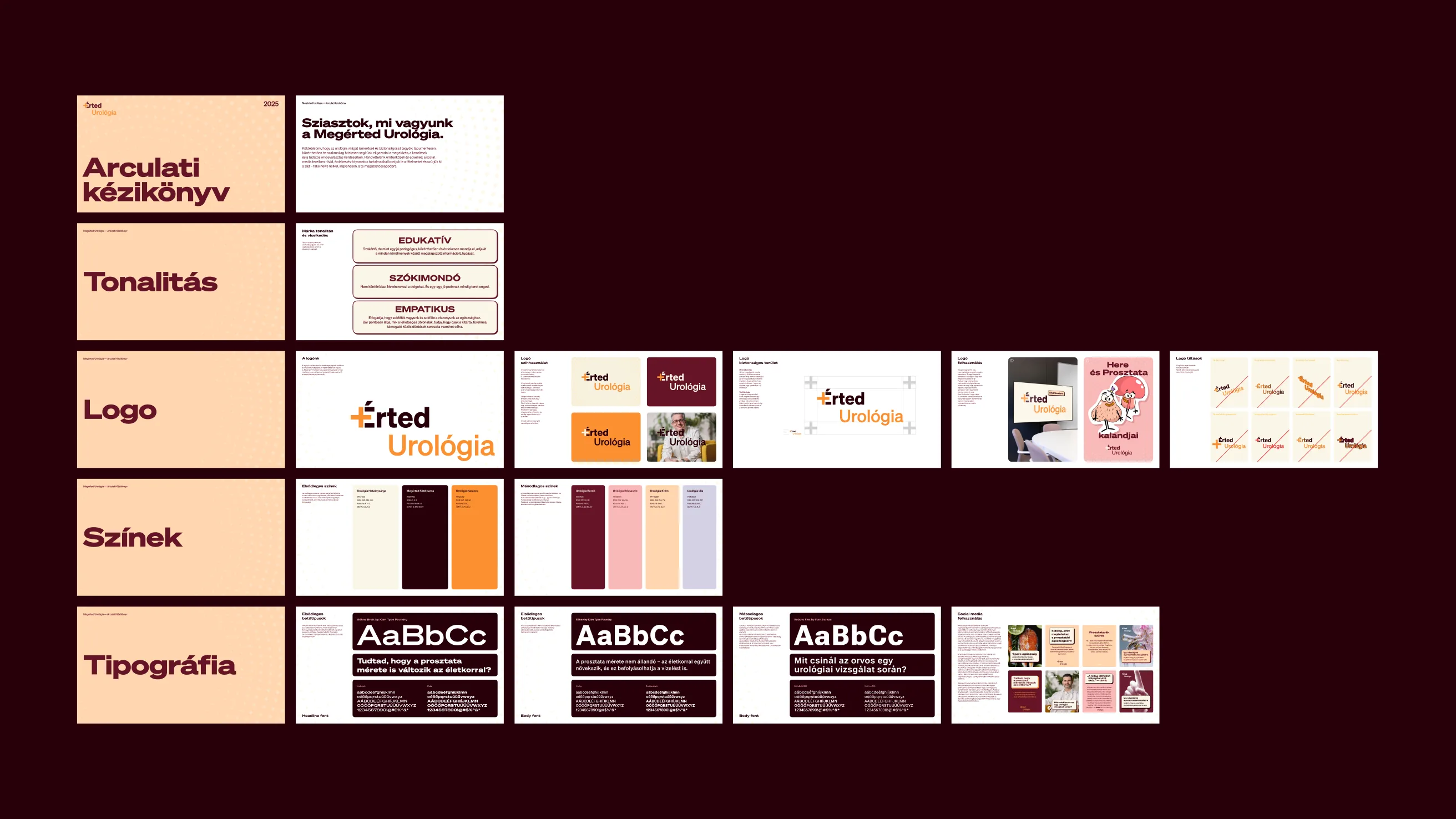
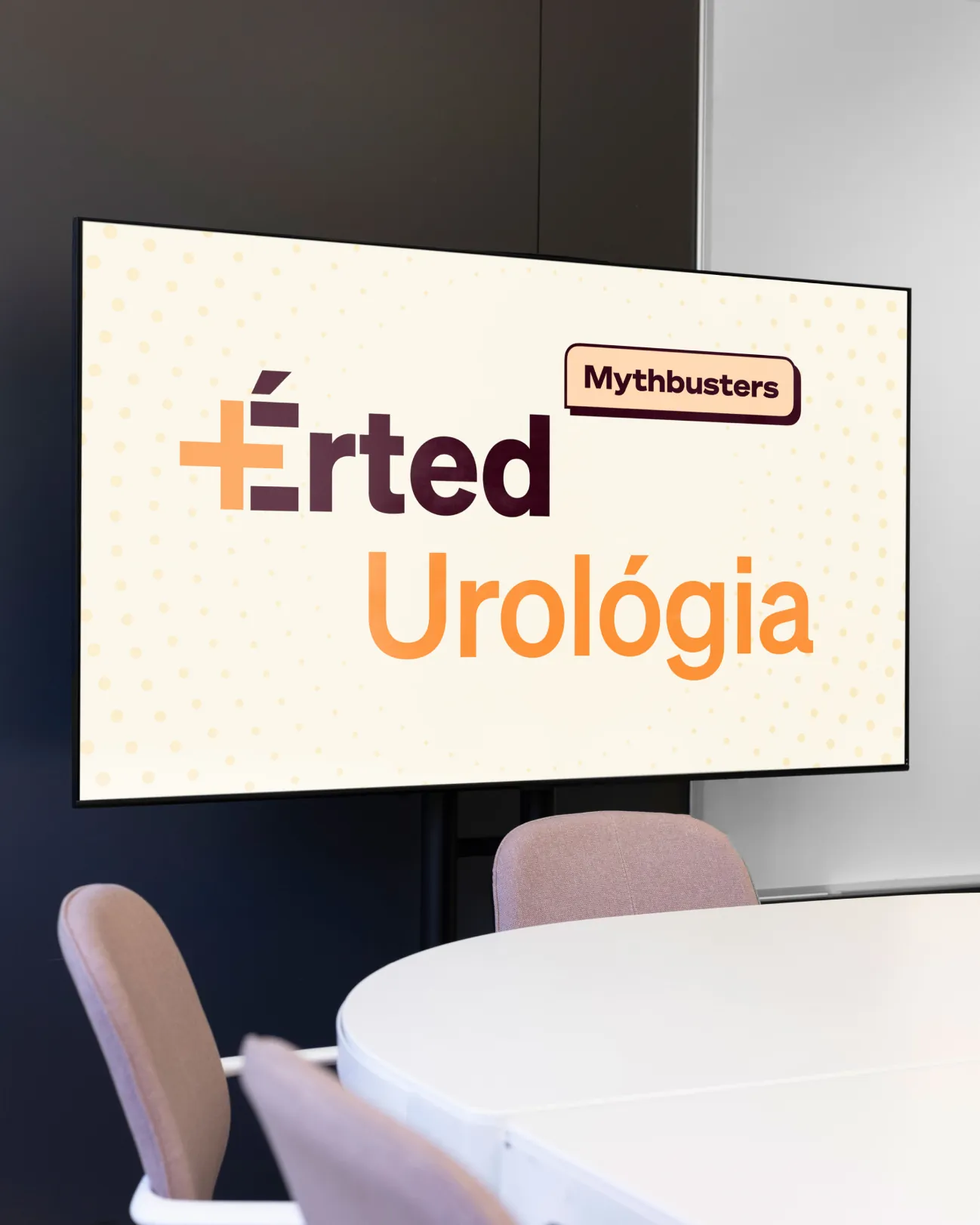
Governance at small scale: guidelines, application, and a quality bar that outlived my involvement.
What makes a hundred-year-old organisation's anniversary memorable?
ProvesOne system that held from the identity all the way through to the film.
An anniversary logo would have been the easy answer. What they needed was a narrative that respected the past and still pointed forward. We told the century through one elderly woman's own memories, then chose the milestones strong enough to carry her from the past into the present.
The alternative we dropped: a chronological timeline. Accurate, and nobody would have finished it.
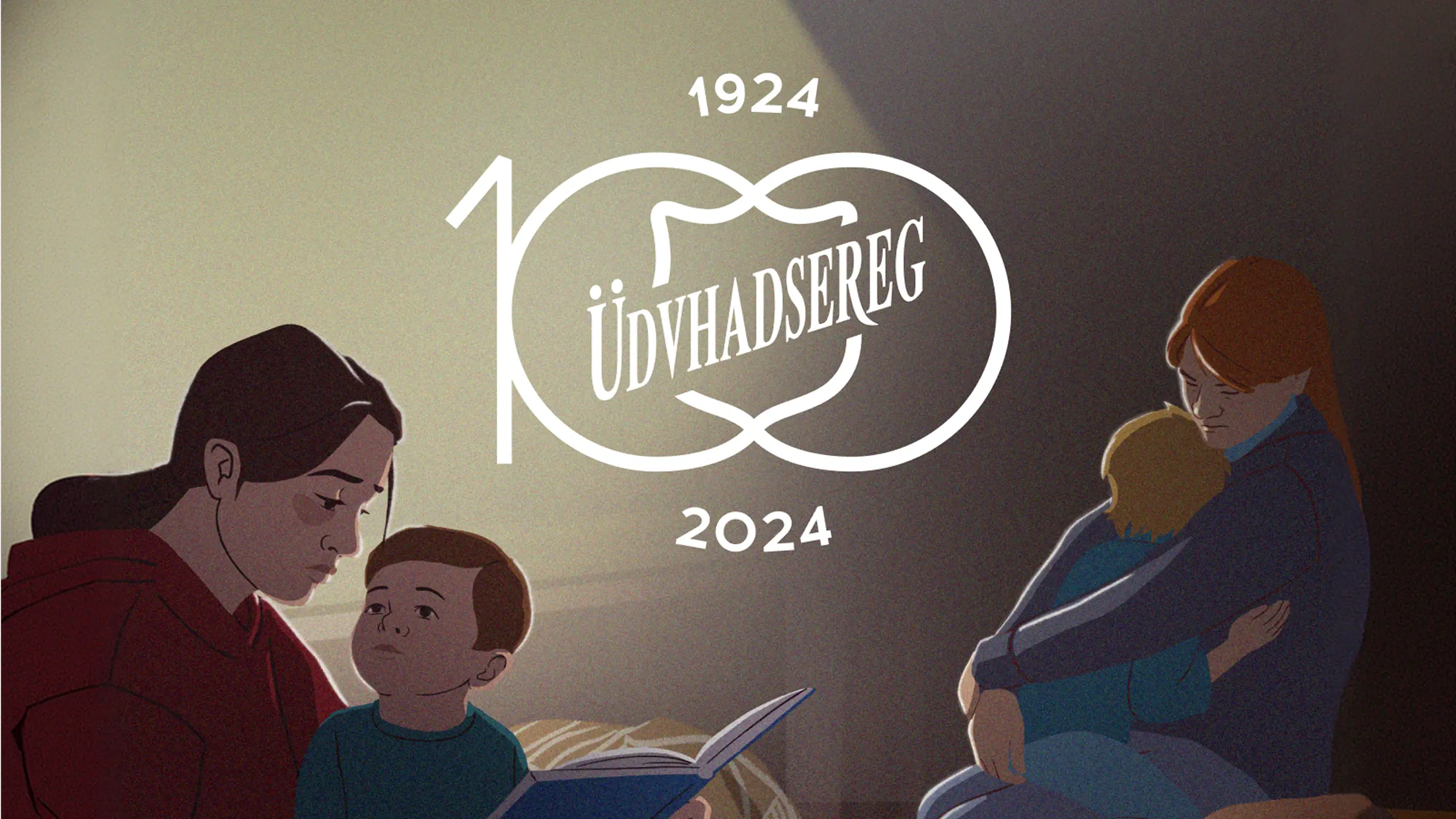
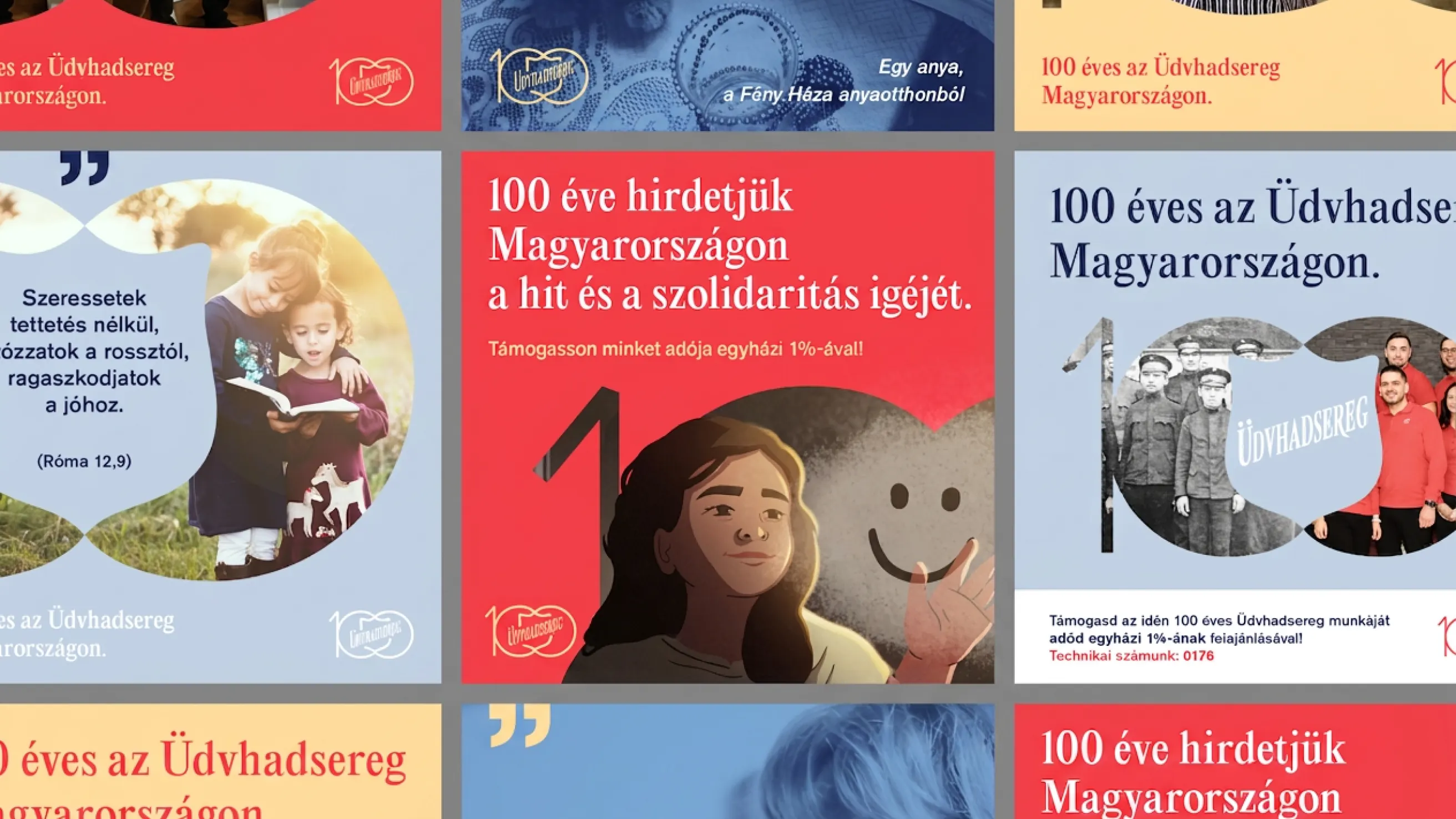
The widest-reach campaign in the organisation's Hungarian history. The international organisation picked it up and ran it on its own channels.
The brief was survival.
ProvesJudgement under pressure: knowing when a system may be broken, and why.
In May 2025 the Hungarian state was preparing to blacklist Hintalovon, a children's rights foundation, because it had won an EU grant. Listed or not, the threat alone could have cut off their donations, their tax allocations and their access to foreign funding. They had weeks.
We took the mark that stood for stability and showed it broken, on every surface. That became the visual language for the whole campaign. Knowing when a system may be broken is part of owning it.

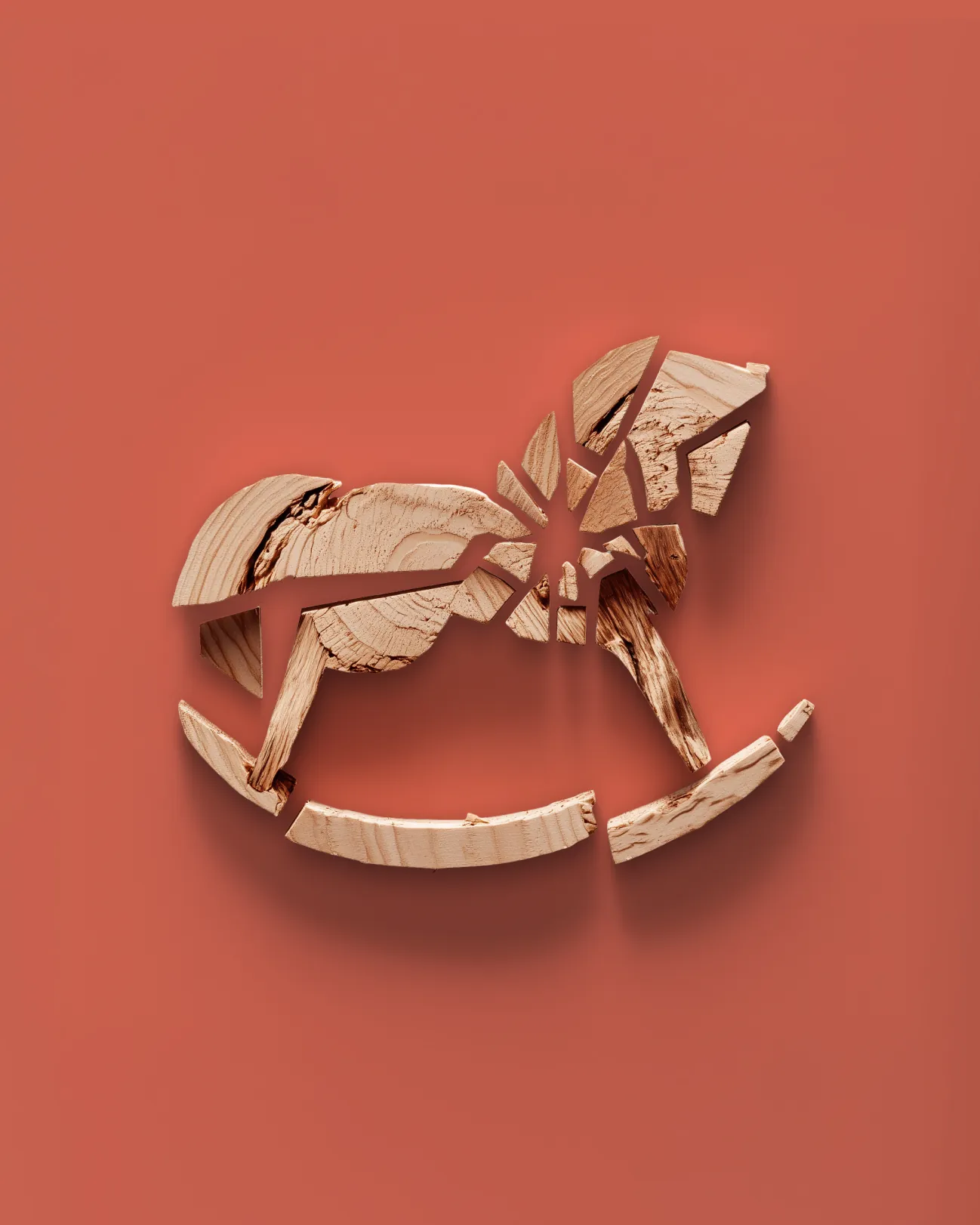
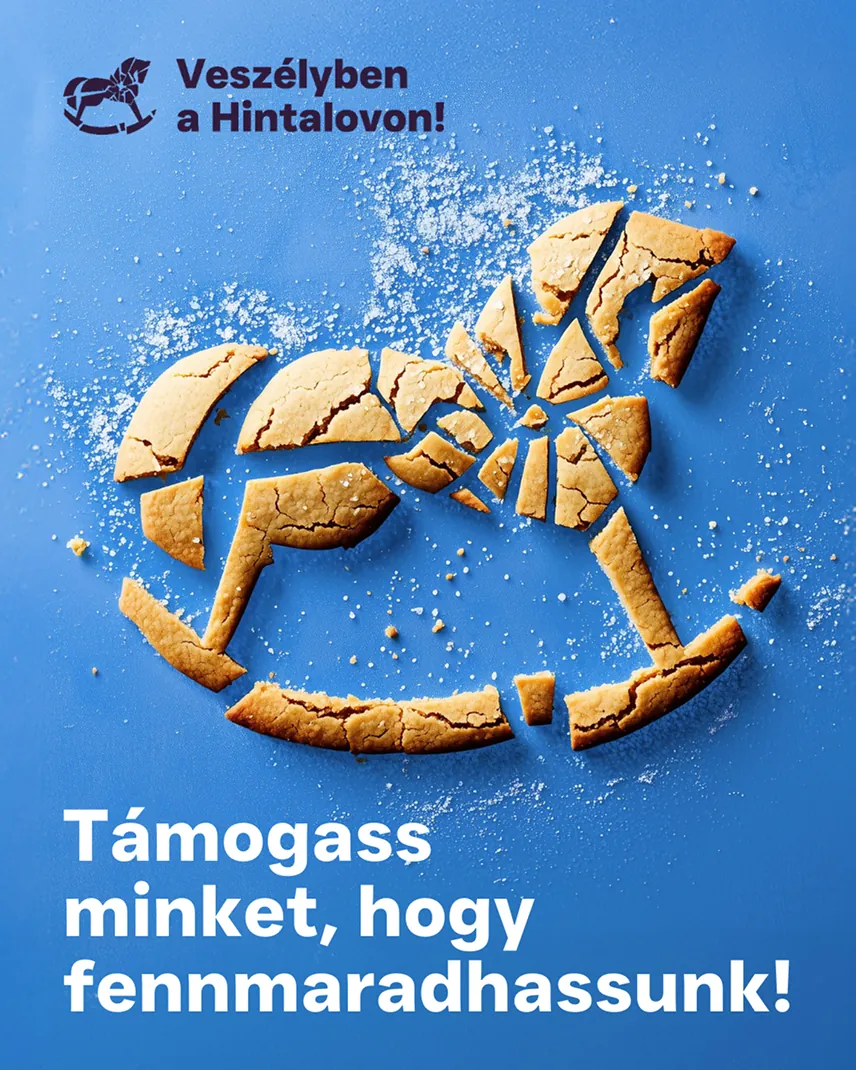
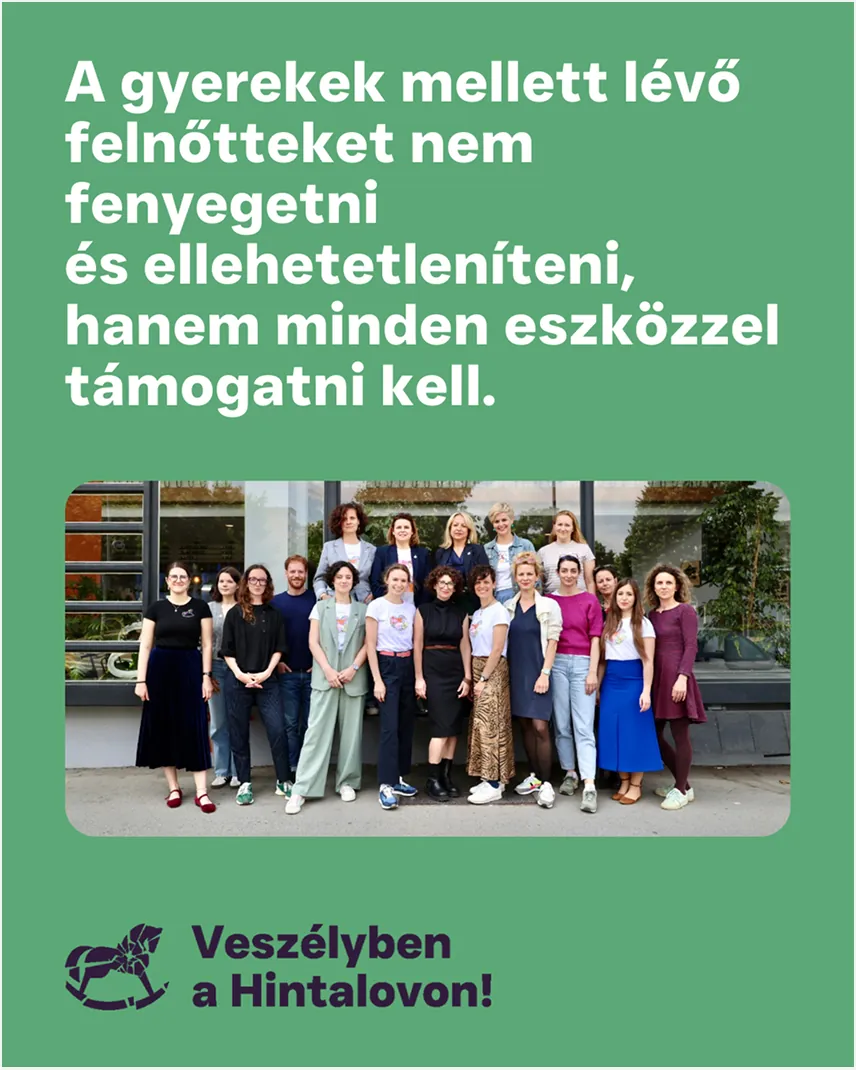
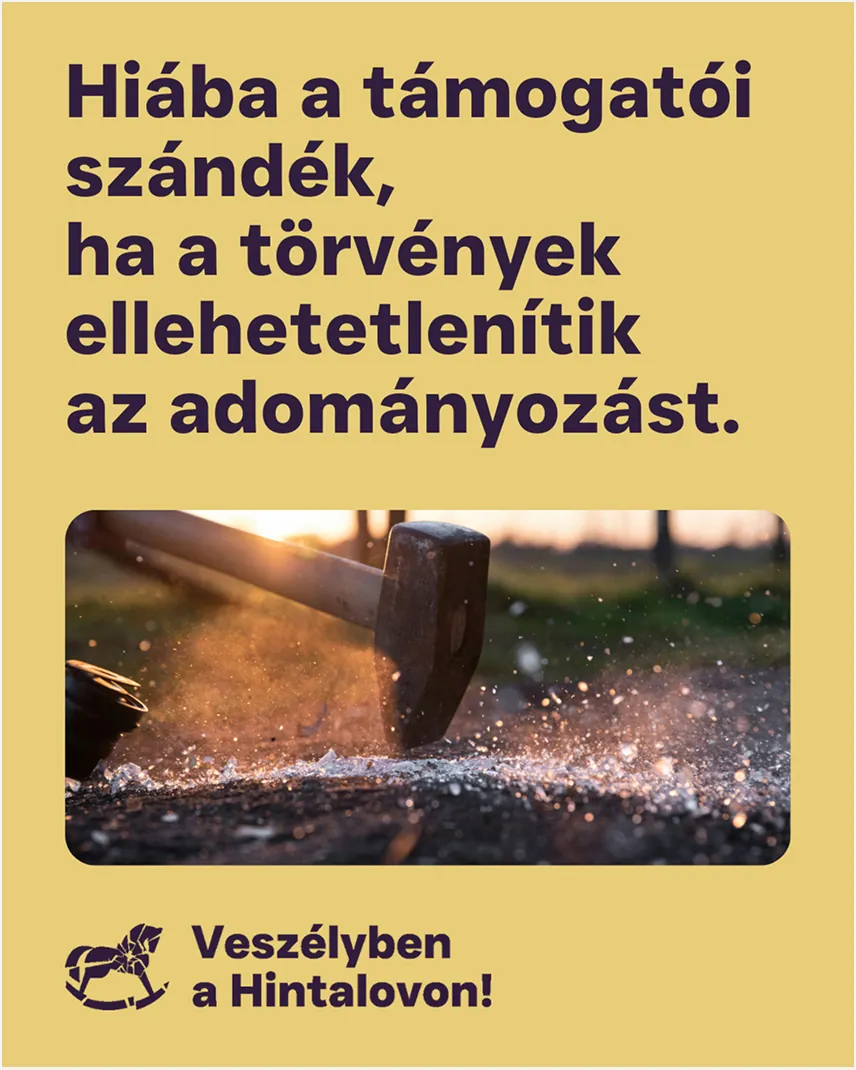
Goal met. The organisation could continue every activity, regardless of how the law turned out.
Ten episodes, ten distinct visual worlds, on a social cadence.
ProvesTen episodes on a social cadence, for an audience of developers.
A software company's 25th anniversary. Celebrating was the easy part. The problem was telling twenty-five years so that people actually read it. So we used the engineers' own raw stories, in their own words: shutting down a national social network, a police summons over a road-toll system, the company's only female developer and her first birthday cake there.
Each episode got its own visual world. The police story ran as noir, the shutdown warm and nostalgic, one of the others as anime drama. That pace exists because generative tools do the exploration and the variants. The calls are mine.
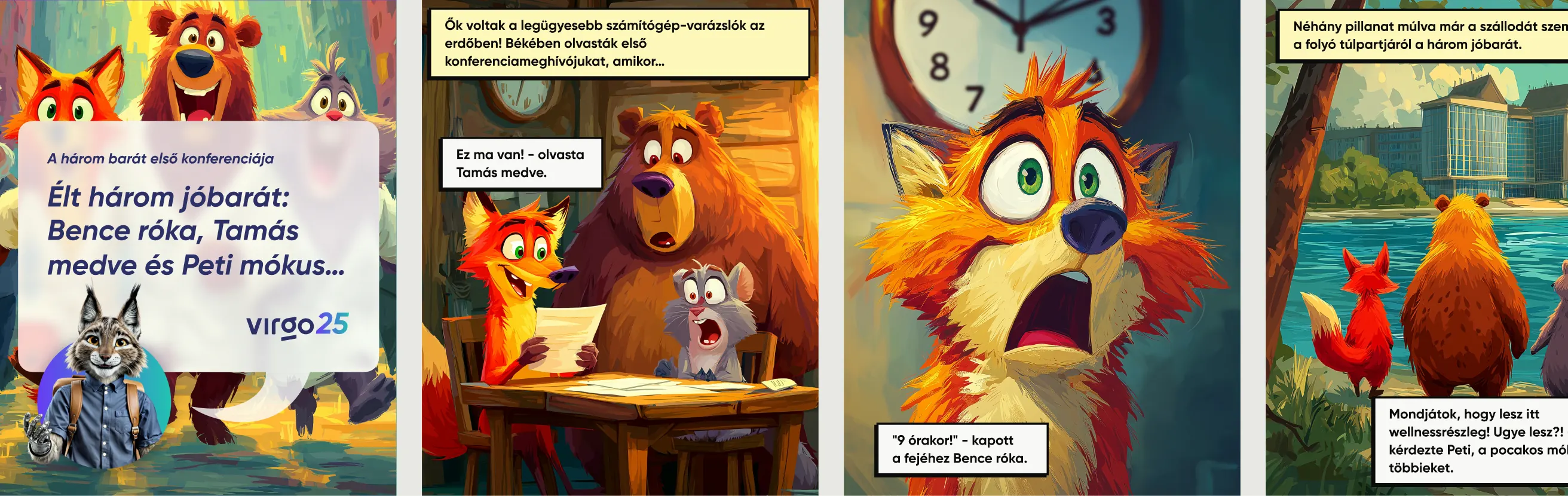
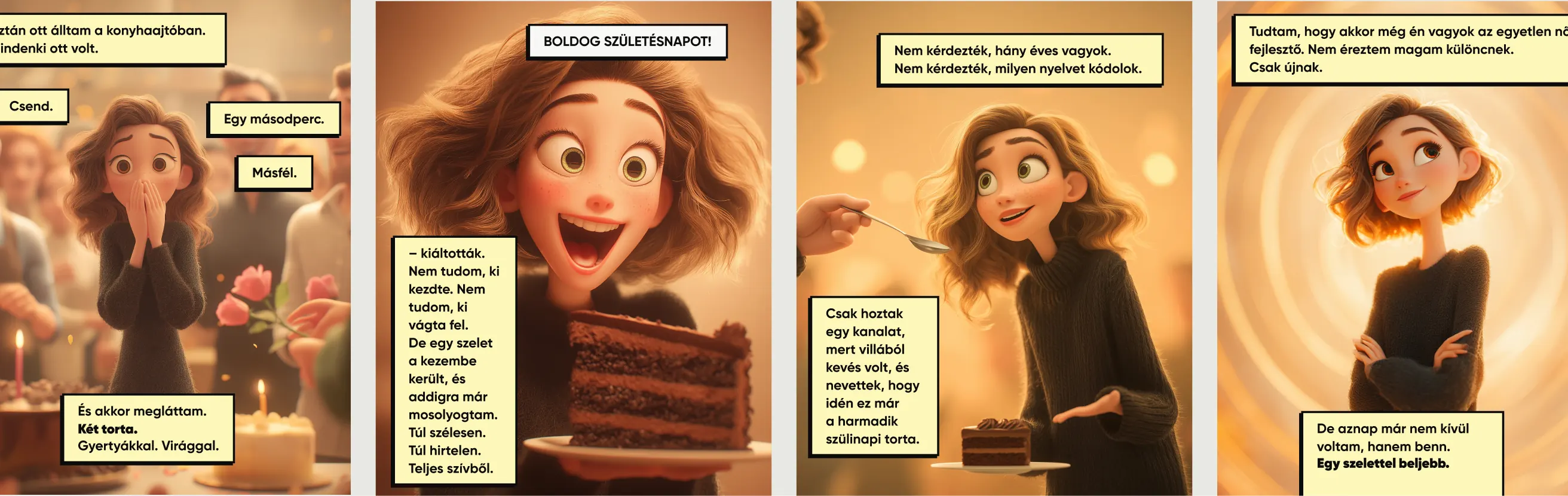
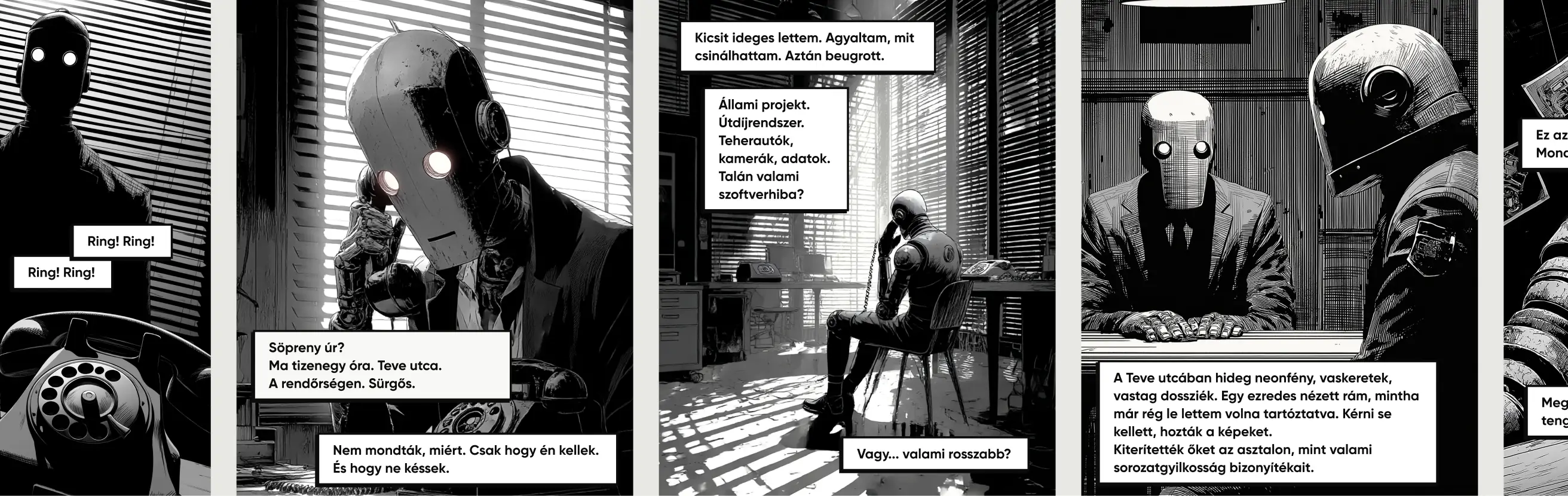
It reached ten episodes because colleagues started bringing me the next story.
MOL — Evox & Dynamic
Retail print across a fuel-station network, concept to press in one pair of hands. A local idea that ended up running in other markets.
United Way Hungary
A reading campaign tied to named schools instead of an abstract cause. Participating children improved 32 percentage points in comprehension, against 9 in the control group.
Print & production, 2012–2020
Eight years leading a DTP team, from campaign design through print-ready production, holding a quality bar across suppliers I didn't employ.
Most campaigns just want to look good. I care more about what holds them together.
I work end to end: concept with a copywriter, then identity, guidelines, and every surface that follows (print, social, web, film). I mentor a two-person design team, brief and quality-check the external studio we work with, and use generative tools daily to reach more and better options before the deadline.
Where I look from
Production. Eight years in print taught me that an approved concept is where the job starts, and that work breaks in the same places every time. You design differently once you can see it coming.
The camera. I shoot, so I know what can be asked of a photographer and what can't. I also know the good frame is never the first one, and that most of directing a shoot is knowing when to go again.
This page. I designed, wrote and built it myself, including the motion and the reduced-motion path. It is the system, not a description of one.
Generative tools. They changed the arithmetic. Ten episodes get made where two used to. The tools do the exploring. Deciding which one is right, and why, is still the job.